Explore CubeCOS Deployment Models
CubeCOS supports three deployment models, each tailored to different infrastructure requirements. Each cluster is composed of nodes assigned specific roles—such as compute, storage, or control—that operate together as a unified system. Cluster size and role composition are flexible, enabling customization based on workload demands and capacity planning.
For details on functions provided by each node role, refer to the roles documentation.
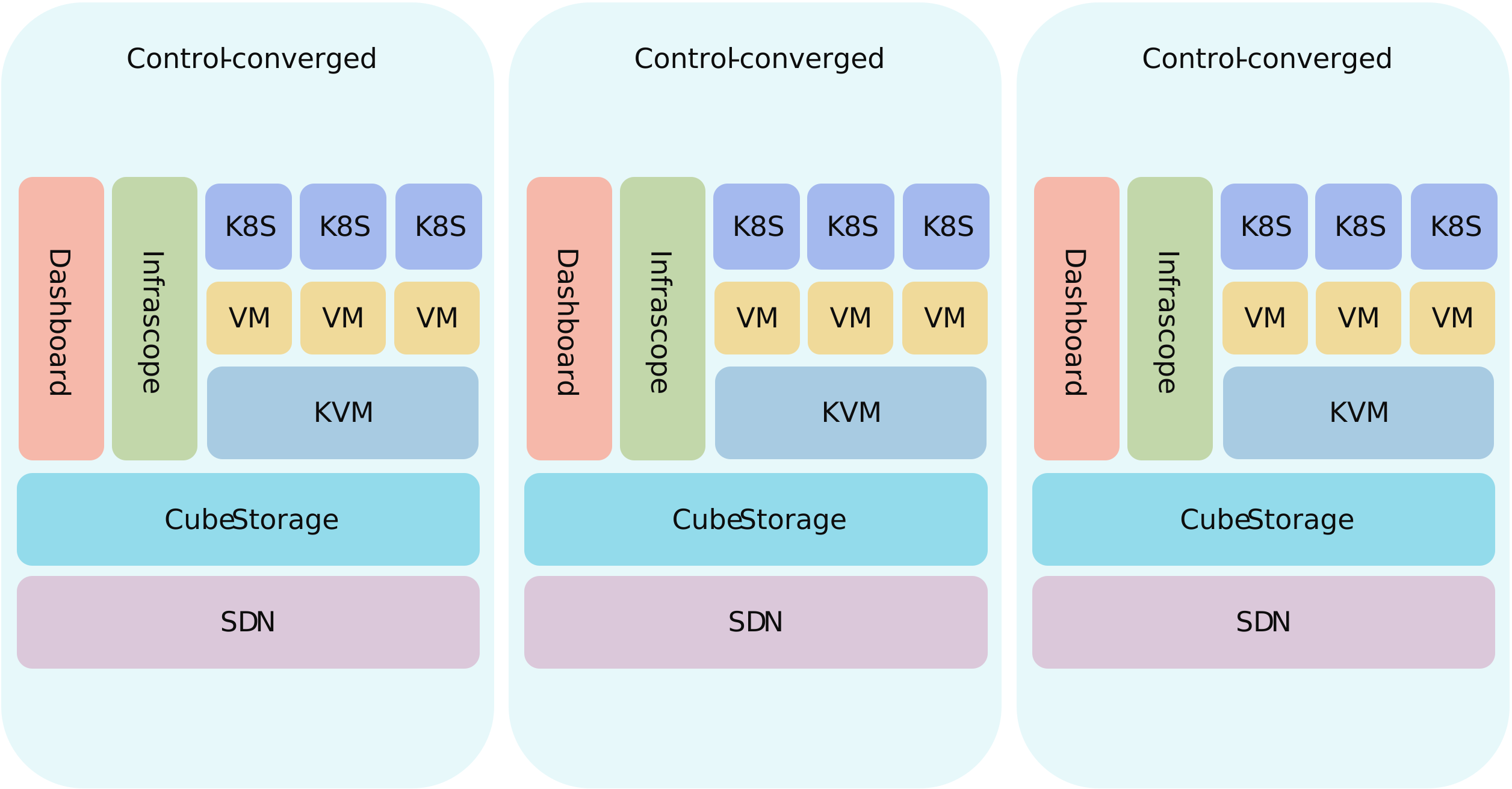
All-in-One (AIO) cluster for small scale and edge deployments
The All-in-One (AIO) cluster is a compact deployment model designed for space and resource-constrained environments. Built with a three-node architecture, AIO delivers full platform capabilities including compute, storage, and control services within a minimal footprint.
Key deployment scenarios for AIO clusters
- Small to medium-sized businesses (SMBs)
- Branch and remote office infrastructure
- Edge computing and IoT workloads
Optimized workloads and services
- Virtualized workloads
- Software-Defined Storage (SDS)
- Lightweight Kubernetes and container platforms
This deployment model is optimal for scenarios requiring minimal infrastructure while maintaining full operational capabilities. It is particularly well-suited for resource-constrained projects, edge cloud environments, and proof-of-concept deployments.
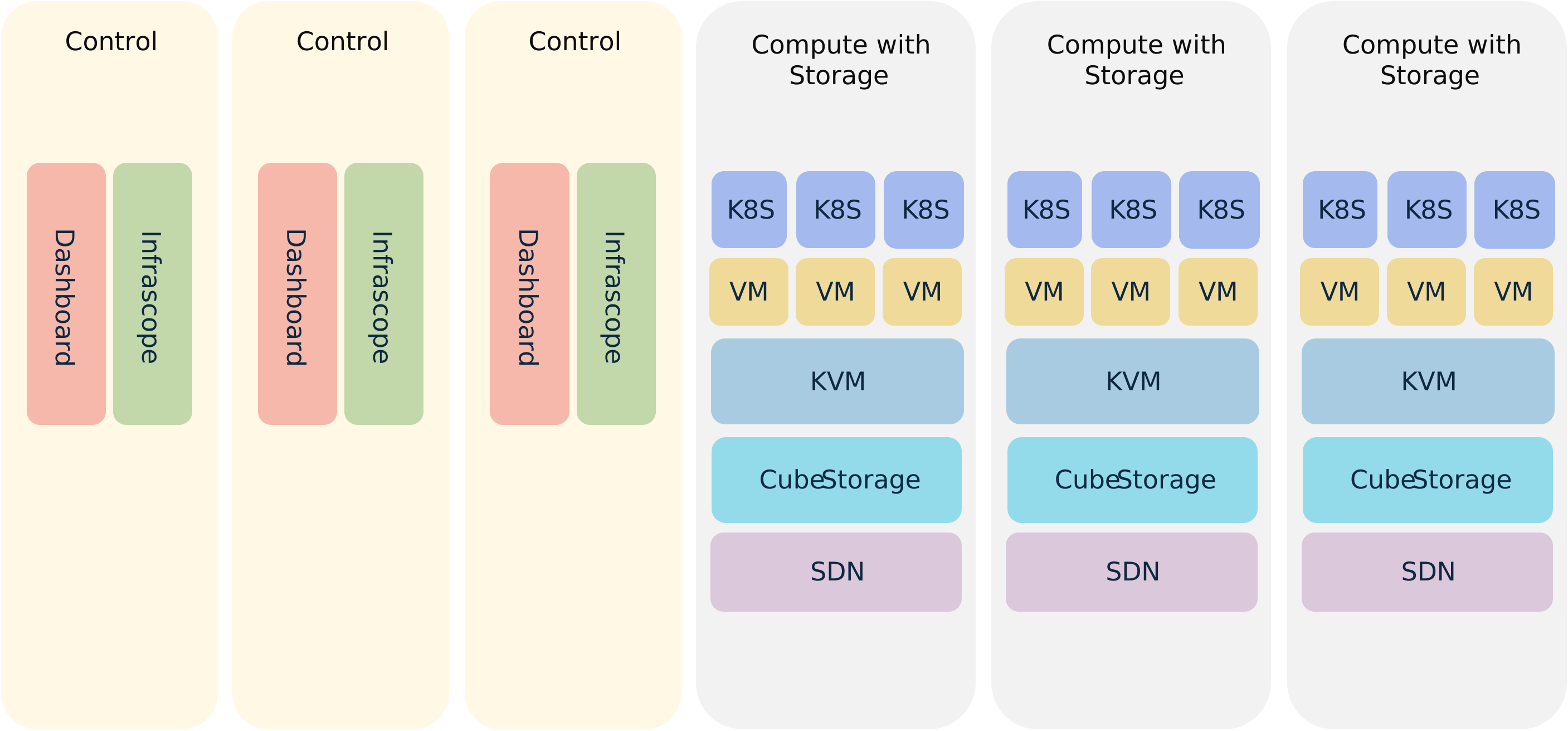
Hyper-Converged Infrastructure (HCI) deployments
The Hyper-Converged Infrastructure (HCI) deployments enable mid-sized organizations to build scalable and resilient cloud environments. HCI clusters typically begin with 6 to 10 nodes or more, allowing greater flexibility, performance, and separation of roles.
Key deployment scenarios
- Building Software-Defined Data Centers (SDDC)
- Providing IT self-service platforms
- Deploying Kubernetes and cloud native workload frameworks
Key HCI Deployment characteristics
- Separates control plane from compute and storage nodes for better reliability
- Offers scale-out expansion with minimal disruption
- Provides better elasticity and lifecycle management
This model is well-suited for organizations aiming to scale workloads and deliver multi-tenant cloud services while maintaining operational efficiency.
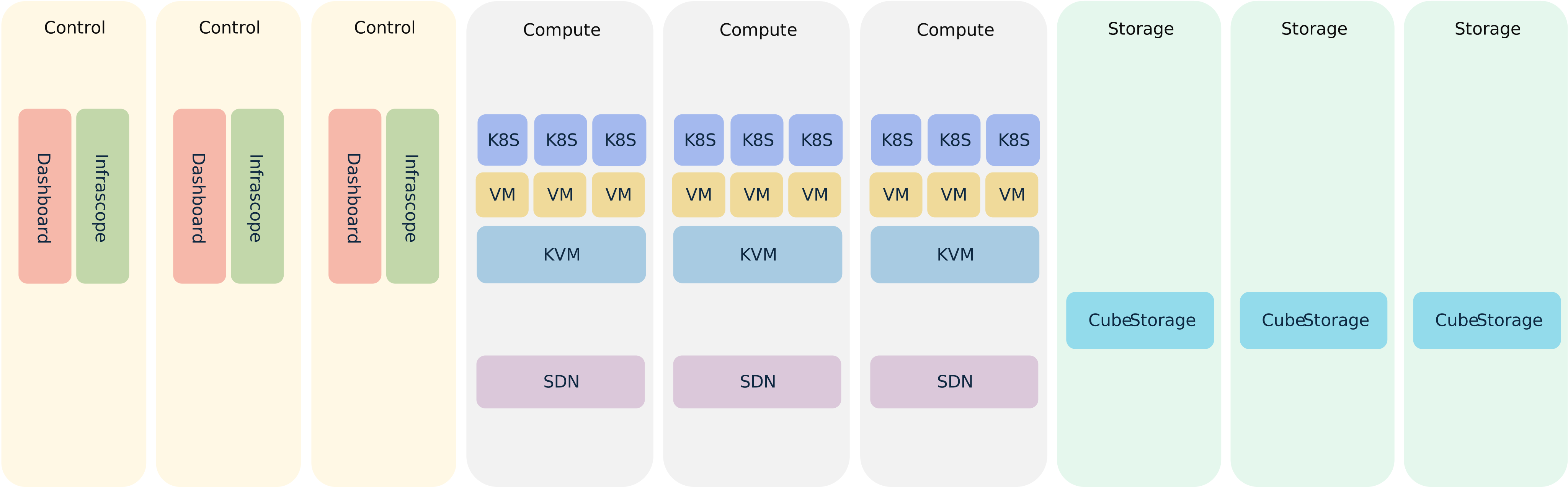
Web scale deployments
Web scale deployments are purpose-built for large enterprises and CSPs that require scalability, high availability, and dedicated infrastructure roles. These clusters typically begin with 9 or more nodes, with clear separation of control, compute, and storage resources.
Key web scale deployment characteristics
- Dedicated nodes for control, compute, and storage
- Supports large-scale SDS cluster with Ceph
- Enables resource isolation for multi-tenant and high-throughput applications
Optimized workloads and services
- Private and hybrid cloud platforms
- AI/ML and GPU-accelerated workloads
- High-density container clusters
- Enterprise data center modernization
Web scale clusters offer the highest level of flexibility and performance. They are optimized for complex, mission-critical workloads where uptime, scalability, and infrastructure separation are mandatory.